
About Birds of Prey
All birds are amazing, but many will agree that there is something even more special about birds of prey and owls. The sight of a Barn Owl floating over a misty meadow at dusk or witnessing the speed and power of a hunting Peregrine or Sparrowhawk is something that is unlikely to be forgotten in a hurry.
Here you will find all the information and facts and figures you need about each of our resident or regular migrant diurnal birds of prey and nocturnal owls.
There are 16 species of bird of prey and five owls regularly encountered in the UK. Most, such as Buzzard, Sparrowhawk, Peregrine and all five owls are resident (present all year round). A small number, e.g. Osprey, Hobby and Honey Buzzard, are migratory; wintering further south arriving in UK in spring to breed before leaving again in late summer/autumn. One species, Rough-legged Buzzard, breeds much further north, and small numbers spend the winter with us.
Rarities do turn up, some (Pallid Harrier, Gyr Falcon) more frequently than others. Eagle Owls are, once again, breeding in this country but the birds are generally believed to have originated from escaped and possibly deliberately (illegally) released captive birds. In total 28 species of bird of prey and 10 species of owl have been recorded in the wild here. A whole raft of other species have also been found, but these are usually escapes or accidental releases from captivity, or ship-assisted birds. It is worth remembering that there are many birds kept for falconry and display, ranging from small falcons to vultures, eagles and large owls, that may be encountered when free flying, or even escaped. Some, especially the falcons, can be hybrids or exotic species that can make identification very difficult.
WHAT IS A BIRD OF PREY?
This may seem like a simple and easily answered question but it’s not! In fact, it is far from easy to answer and the more you look into it the more confusing it becomes.
Often, we assume birds of prey eat meat, are predatory and have the sharp claws and hooked beaks necessary to despatch and deal with their meaty prey. Whilst in many cases this is true, some members of the tribe, such as Honey Buzzard, specialise in insects. The Palm Nut Vulture, an African species, feeds predominantly on vegetable matter. Indeed, it is not possible to classify birds as ‘birds of prey’ due to their diet of mammalian meat, as so many raptors and owls feed on insects, fish, other birds or even specialise on reptiles. Likewise, a whole host of non-birds of prey live on the same diets: gannets, auks and terns feed almost exclusively on fish, members of the heron family are superb predators taking mammals, fish, amphibians, reptiles, insects and even carrion. Shrikes share the same hooked beaks and sharp claws as birds of prey and live a predatory lifestyle. Known as butcherbirds, shrikes take large insects, small birds and reptiles and the larger species also take small mammals; in some older publications shrikes were even included as ‘honorary’ birds of prey!
Insect-eaters abound in the bird world, and even seed-eaters usually offer insects to their growing young, so it is clear that we cannot use diet, or even presence of sharp claws and hooked beak, as a defining feature of birds of prey and owls. So, what is the answer?
The definition of bird of prey is a rather artificial one and based on taxonomy (classification). Owls all belong to the taxonomic order Strigiformes, which is further split into two families, Barn Owls and all other owls. Birds of prey are a slightly more complex mix of three orders of birds, two of which occur in our area: Cathartiformes (New World Vultures), Falconiformes (Falcons) and Accipitriformes which is itself split into three families (Secretary Bird, Osprey and all other birds of prey such as eagles, kites, harriers and hawks)
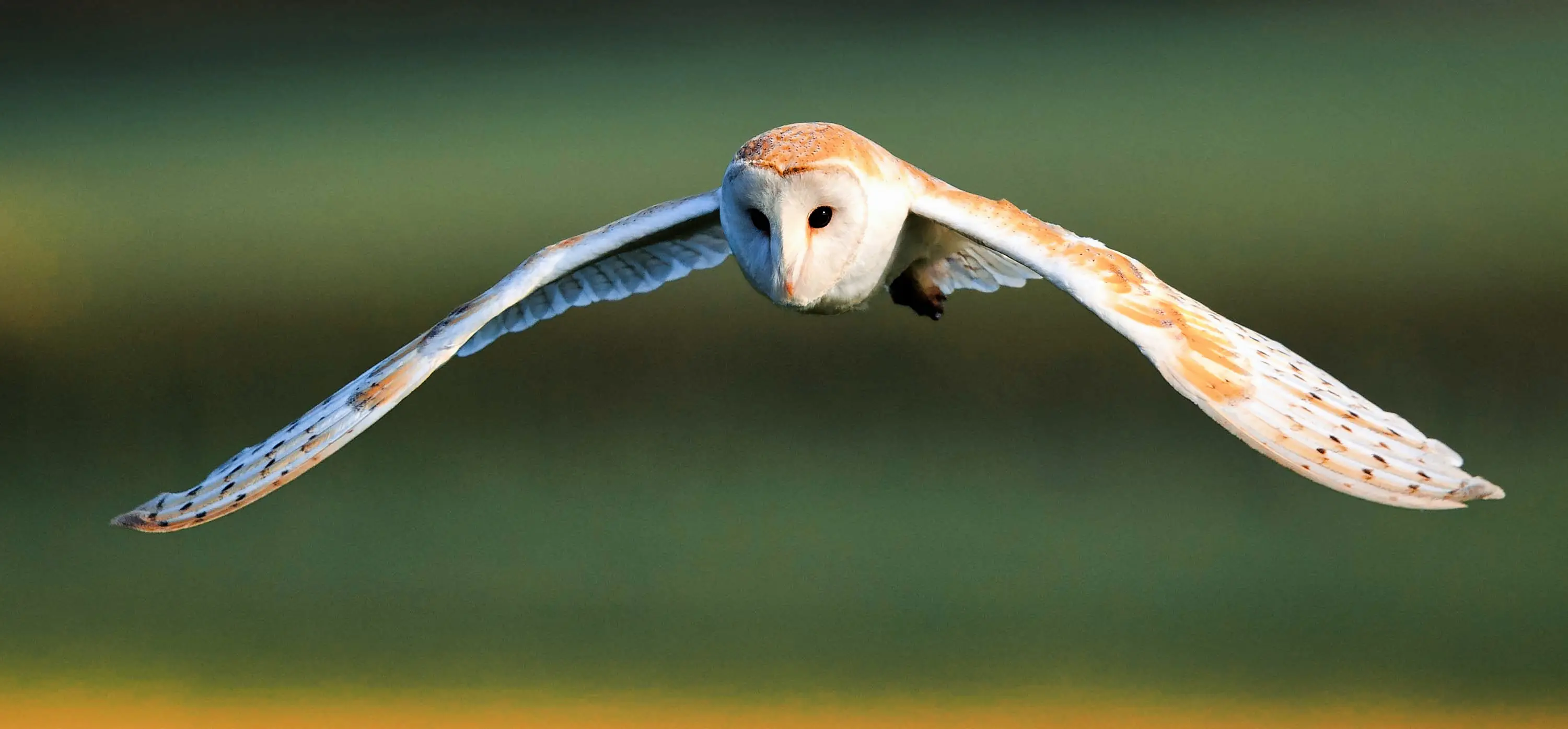
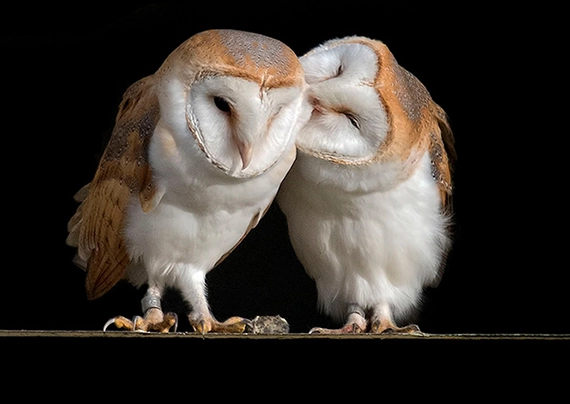
A favourite of the bird of prey species, the Barn Owl is one of the easiest to identify with its heart shaped face and white and brown plumage. They can be seen gliding silently over open fields hunting small mammals using their acute hearing to find their prey day or night in the vegetation.
Key Facts
Common name: Barn Owl
Scientific name: Tyto alba
Habitat: Farmland, marshes, reedbeds, moors
Diet: Voles, mice, rats and sometimes birds
Size: 33–35cm; wingspan: 85–93cm; weight 300g
Status: Resident breeding birds
Population size: 4,000 pairs
Conservation status GREEN (least concern)
Removed from AMBER in 2015, due to population rise/stability and increased survival of nests and chicks. Population estimates are complicated by its nocturnal habits making it difficult to survey, and by the fact the population can crash after a severe winter but recover within a year if weather is ideal and vole abundance high. The large number of chicks produced can also help the population rapidly recover after a poor year. Large fluctuations in populations are frequent.
Appearance
Barn Owls are golden brown and grey with a white underside, with heart-shaped faces and variable amounts of spotting. The males are slightly smaller and usually have almost pure white undersides, whereas females have more spots on their chest.
Lifespan
Their lifespans are short-lived, with an average in the wild of 4 years. Adults have a 72% year-to-year survival rate. Juveniles have less than a 40% chance of surviving their first year. The oldest known wild bird was just over 15 years (ringing recovery), and captive birds can live over 20 years.
Nesting
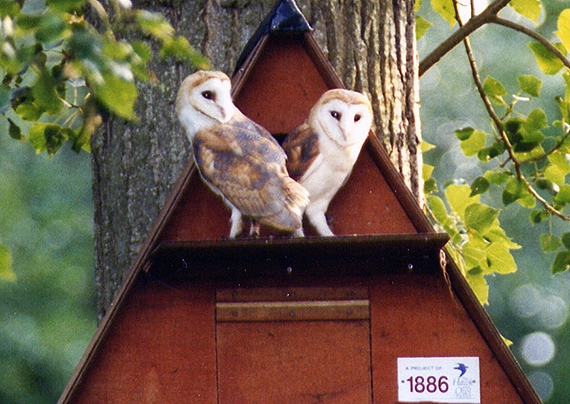
Barn Owls can breed from 1 year old and often nest inside farm buildings, tree cavities and sometimes in holes in rock faces or straw stacks. They readily take to artificial nest boxes, many of which are provided by Hawk and Owl Trust. 80% of UK Barn Owls are now thought to breed in nest boxes.
Breeding is very dependent on prey numbers; double brooding is not uncommon, and three broods occur when voles are very plentiful. Birds mate for life unless one of the pair is killed, when a new pair bond may be formed. The female does all the incubation, and she and the young chicks are reliant on the male for food before the chicks fledge.
Number of eggs: 4-6
Incubation: 32 days
Fledging time: 53-61 days
Habitat and Distribution
The Barn Owl has the title of the most widespread land bird in the world, occurring on all continents except Antarctica. They can be found in a huge range of habitats - absent only from polar and desert regions, the highest mountain ranges and some Pacific islands. While found in Scotland, they are not present in the Highlands due to a lack of suitable habitat. There has been rapid decline in Barn Owl numbers in Northern Ireland in recent years. This decline is due to habitat loss.
Movements
Non-migratory, British Barn Owls are astonishingly sedentary with the average dispersal of young birds being just 12km from where they fledged. Occasional European Barn Owls (darker-breasted Tyto alba guttata subspecies) are recorded, especially in south-eastern counties.
Feeding
Barn Owls specialise in hunting animals on the ground, and nearly all their food consists of small mammals which are located by sound, their hearing being very acute. The short-tailed field vole is the preferred prey species, caught in areas of rough grassland, and can form up to 85% of its diet. Barn Owls will also hunt hedgerows and other habitats where they take wood mice, bank vole, shrews and young brown rats. Small birds are also occasional prey, but daytime hunting owls are at risk of their prey being stolen by other birds of prey, especially Kestrel.
Although traditionally considered a nocturnal bird, British Barn Owls can often be seen hunting at dusk and dawn. They will even hunt during the day in winter and during the breeding season when they have young to feed. Barn Owls do not hoot but will utter a hiss or screech, often heard near the roost or nest.
Our Mission
We believe in a world where birds of prey and their habitats are safe, thriving, and accessible for all to experience and protect.
Through dedicated conservation efforts, research, and education, we work tirelessly to preserve these magnificent species and the environments that support them.
How You Can Help
Your support makes our conservation efforts possible. There are many ways to get involved:
Become a Member, Volunteer or Donate
Join our community and gain exclusive access to member events, updates, and more. Every donation directly supports our projects and conservation efforts.
Experience the Wild
Visit our nature reserves and witness raptors in their natural habitats. Our reserves are open to the public, offering a unique opportunity to see conservation in action and connect with nature.
Plan Your Visit
From walking trails to guided tours, our reserves offer a memorable experience for all ages.